
Georgia Tech awards and coordinates numerous student fellowships – ranging from a few hundred dollars, which may be awarded on top of other funding, such as an assistantship, to full fellowships that cover tuition and fees and provide a stipend.
Institute-level fellowships are managed by the Office of Graduate Education and paid via the Office of Scholarships & Financial Aid and the Office of the Bursar. Most fellowships are awarded and nominated internally by schools, not by Graduate Education nor the Office of Scholarships and Financial Aid. There are also many school-level fellowships, which are handled separately by individual academic departments.
The Office of Graduate Education administers Institute-funded fellowships, including the President’s Fellowship, Georgia Tech Institute Fellowship, Stamps Fellows Program, and many others. For example, we manage externally funded programs such as the National Science Foundation’s Graduate Research Fellowship Program, and Department of Energy fellowships. We work with colleges to facilitate internal competitions for ARCS Foundation Atlanta scholars, and nomination processes for Dolores Zohrab Liebmann, Gilliam fellowship for Advanced Study and Schmidt Science Fellows. We also work with Academic Deans from individual Colleges to facilitate selection processes for donor-initiated fellowships.
The following information is meant to help you better understand the fellowship and funding opportunities available to you.
Fellowships vs. Scholarships
Fellowships:
- Usually awarded for graduate research.
- Merit-based; not need-based.
- Funding is typically intended for tuition and fees, but is sometimes discretionary for student awardees to use as they see fit.
- Often come with a stipend.
Scholarships:
- Awarded based on academic achievements, financial need, or a combination.
- Usually merit-based; sometimes need-based.
- Generally, funding must be applied directly to tuition and other related expenses.
- Do not include stipends.
Preparing Fellowship Applications
- Once you begin the fellowship application process, the Communication Center is a great resource.
Contact the Pre-Graduate and Pre-Professional Advising unit for help with locating additional fellowship opportunities and preparing applications.
Fellowship Writiting Resources
See the Fellowships Writing Resources Dropbox folder (GT login required) for workshop recordings, presentation slides, and more resources from the Georgia Tech Director of Professional Development and Postdoctoral Services.
(text and background only visible when logged in)
(text and background only visible when logged in)
Georgia Tech Pivot-RP Funding Database
- Funding opportunities for all disciplines and project types.
- Create an account to save searches and receive funding alerts. View instructions on how to create an account.
Georgia Tech Library
The Georgia Tech Library regularly offers workshops on how to use database platforms effectively. Keep an eye out for the next workshop on the Library events page.
(text and background only visible when logged in)
(text and background only visible when logged in)
Internship and Fellowship Programs Managed by ORISE
ORISE manages programs for the U.S. Department of Energy, U.S. Department of Health and Human Services, U.S. Department of Defense, U.S. Department of Homeland Security and other federal agencies that pair students, recent graduates, postdocs, and faculty with programs that help grow their STEM expertise and experience.
Below are links to websites created specifically to provide information about these ORISE programs for prospective applicants.
U.S. Department of Energy
Are you looking to tackle the nation’s energy, environmental, cybersecurity, and nuclear challenges? The U.S. Department of Energy [energy.gov] and its national laboratories [energy.gov] provide opportunities to learn about the mission, functions, and operations of DOE and the national laboratories, and prepare you for research, technical and professional positions within DOE and other organizations that support the DOE mission. Opportunities are available for students, postgraduates from all academic levels, and faculty.
Albert Einstein Distinguished Educator Fellowship Program - DOE-sponsored
The Albert Einstein Distinguished Educator Fellowship (AEF) Program provides a unique opportunity for accomplished K-12 educators in the fields of science, technology, engineering, and mathematics (STEM) to serve in the national education arena. Fellows spend eleven months working in Federal agencies or in U.S. Congressional offices, applying their extensive knowledge and classroom experiences to national education program and/or education policy efforts.
DOE Marine Energy Fellowship
The DOE Marine Energy Fellowship offers opportunities to graduate students and postgraduates to conduct graduate thesis research at both their academic institution and at an external hosting facility carrying out research in marine energy (ME). Hosting facility may be a government research facility, industry site (including but not limited to technology developers), or other facility approved by the Office of Critical Minerals and Energy Innovation (CMEI), Hydropower and Hydrokinetic Office (H2O) as a host facility. Participants spend a minimum of six months at the host facility, virtually or in person.
DOE Office of Science Graduate Student Research (SCGSR) Program
The goal of the Office of Science Graduate Student Research (SCGSR) program is to prepare graduate students for science, technology, engineering, or mathematics (STEM) careers critically important to the DOE Office of Science mission, by providing graduate thesis research opportunities at DOE laboratories. The SCGSR program provides supplemental awards to outstanding U.S. graduate students (US citizens or lawful permanent residents) to pursue part of their graduate thesis research at a DOE laboratory/facility in areas that address scientific challenges central to the Office of Science mission. The research opportunity is expected to advance the graduate students’ overall doctoral thesis while providing access to the expertise, resources, and capabilities available at the DOE laboratories/facilities.
DOE Scholars Program (DOE Scholars)
The DOE Scholars Program provides opportunities designed to introduce DOE missions, functions, and operations to talented undergraduate and graduate students, as well as recent graduates. These opportunities will help prepare Scholars towards the full range of entry and mid-level research, technical and professional positions within DOE and other organizations that support the DOE mission.
Energy Innovator Fellowship Program (EIF)
The Energy Innovator Fellowship (EIF) program is an educational opportunity that provides funding for recent graduates and early-career energy professionals (within five years of graduation) to engage with critical energy host organizations on projects aimed at modernizing the power grid, improving energy infrastructure, and strengthening the reliability, affordability, and security of the U.S. power system. The program invites candidates from various educational and professional backgrounds to participate in a two-year learning experience with eligible host organizations, including electric public utility commissions, municipal and cooperative utilities, state energy offices, grid operators, Tribal utilities, Inter-Tribal councils, and other Tribal organizations.
The program is designed to expand access to energy-related learning opportunities across the country while contributing to the national transition to resilient and affordableFaculty Research Program (FRP)
The Faculty Research Program offers qualified academic faculty an opportunity to collaborate with NETL principal investigators on research that is mutually beneficial to NETL and the participant at state-of-the-art NETL facilities. While typical appointments are part-time, some appointments are offered during the summer and as a sabbatical. Prior to the appointment, the NETL principal investigator and participant will define the scope of research and schedule the appointment period. Appointment periods range from one month to more than one year. Funding varies and is awarded based upon the participants academic salary.
Faculty-Applied Clean Energy Sciences (FACES)
The Faulty-Applied Clean Energy Sciences (FACES) program is designed to empower STEM faculty from Minority Serving Institutions (MSIs) by equipping them with enhanced research skills and expertise in clean energy science. FACES is a 10-week program that aims to develop scalable education modules on topics like community engagement, human behavior, energy and environmental science, and artificial intelligence.
Fusion Energy Sciences (FES) Postdoctoral Research Program
The Fusion Energy Sciences Postdoctoral Research Program offers recent doctoral degree recipients the opportunity to conduct research in the U.S. Department of Energy’s (DOE) fusion energy research and development programs. Participants acquire experience and training in areas of fusion energy science, interact with outstanding scientists and engineers, and have access to advanced equipment and facilities. Appointments are made to designated DOE laboratories, universities, and other FES-approved facilities performing fusion-related research. The program provides opportunities to learn and collaborate with researchers at international research facilities working on research/technology related to the DOE FES mission to accelerate progress toward improved technologies.
IBUILD: Innovation in Buildings Graduate Research Fellowship
The Innovation in Buildings (IBUILD) Graduate Research Fellowship seek to strengthen the pool of well-trained, diverse PhD scholars who are equipped for research-intensive building technologies careers across all sectors. IBUILD Fellows receive research and educational support to conduct innovative research at their home institution in an area with demonstrated relevance to building energy efficiency. In addition to funding high quality research, the fellowship provides professional development, mentoring, networking, and internship opportunities.
Mickey Leland Energy Fellowship Program (MLEF)
The U.S. Department of Energy’s (DOE) Mickey Leland Energy Fellowship (MLEF) Program is a 10-week summer research internship for undergraduate and master's students in STEM majors. Participants complete a cutting-edge research project at one of the Department’s National Laboratories or DOE Headquarters in support of the Department of Energy’s Hydrocarbons and Geothermal Energy Office (HGEO).
MLEF participants are mentored by DOE scientists and engineers while completing a research project over the course of the summer. At the end of the program, participants present their research findings at the MLEF Technical Forum. During the 10-week appointment, fellows receive a weekly stipend, and may be eligible to receive travel and housing assistance.National Science Bowl (NSB®)
The U.S. Department of Energy (DOE) National Science Bowl® is a nationwide academic competition that tests students’ knowledge in all areas of science and mathematics. Middle and high school student teams from diverse backgrounds are comprised of four students, one alternate, and a teacher who serves as an advisor and coach. These teams face-off in a fast-paced question-and-answer format, being tested on a range of science disciplines including biology, chemistry, Earth science, physics, energy, and mathematics.
Next Generation STEM Internship Program (NGSI)
The Next Generation STEM Internship (NGSI) Program affords juniors, seniors, and recent graduates from accredited high schools or home school programs in Anderson, Blount, Knox, Loudon, Roane, and Sevier counties the opportunity to participate in STEM or STEM-related projects with researchers and professional staff at Oak Ridge National Laboratory (ORNL).
NNSA IMPACT Internship Program (NNSA-IMPACT)
The National Nuclear Security Administration (NNSA) IMPACT Internship Program provides paid internship opportunities for undergraduate and graduate students and recent graduates from Minority Serving Institutions. The NNSA-IMPACT is open to all academic backgrounds, and offers opportunities with the NNSA, national laboratories, and site offices. Internships involve projects focused on engineering, science, research, technology, policy, business, and government relations.
Oak Ridge Office of Environmental Management (OREM) Science Education and Internship Program
The OREM Internship program is focused on projects and activities related to DOE-OREM legacy clean-up missions at East Tennessee Technology Park, Oak Ridge National Laboratory, and Y-12 National Security Complex sites. EM's first priority is to ensure the safety and health of the public and EM's workforce while continuing to protect the environment. OREM carries out the mission using sound business practices, innovative management approaches, and science and technology to reduce risks and costs within the EM regulatory framework. Participants will collaborate with Portfolio Federal Project Directors on all aspects of their projects such as: basic project management, engineering, budget, cost control, regulatory compliance, and contractor oversight.
Office of Environmental Management Success Through Academic Research Scholarship (EM STARS)
The U.S. Department of Energy Office of Environmental Management Success Through Academic and Research Scholarship (STARS) Program provides opportunities for undergraduate students pursuing degrees in science, technology, engineering, and mathematics, cybersecurity, and other manufacturing disciplines. The program seeks to introduce undergraduate students from qualifying institutions to the missions, functions, operations, and culture of Environmental Management and provide students with the skills, experiences, and resources needed to pursue a master’s degree and ultimately begin a rewarding career within the Department of Energy Office of Environmental Management complex.
Pathways to Computing Internship Program (PCIP)
The Pathways to Computing Virtual Internship Program at Oak Ridge National Laboratory (ORNL) is a virtual 10-week summer program that provides undergraduate students with learning opportunities in computer science, computational science, and mathematics. Students will be mentored by ORNL research and technical staff and will be able to make contributions to projects in diverse domains including computer science, health data science, and climate science. In addition, students will gain valuable skills needed for a successful career in computing fields. Selected interns will have access to ORNL’s leadership-class facilities, including Summit, the world’s 2nd most powerful supercomputer.
Postdoctoral Research Fellowship Program (Postdoc)
The NETL Postdoctoral Research Fellowship Program (Postdoc) is a high-intensity program designed to not only identify recent doctoral graduates of high promise, but to continue developing advanced research skills within those graduates. It allows the postdoctoral researcher to systematically outline career goals and helps provide the means of achieving these goals. One way the program helps to achieve these goals is the critical interaction with NETL principal investigators, who become the postgraduate’s mentor. This interaction affords the postdoctoral researcher a unique opportunity to define and structure his or her investigations, to establish a research paradigm, and to publish results--all critical skills needed to become an independent scientist or engineer.
Postgraduate Research Program (PGRP)
The NETL Postgraduate Research Program (PGRP), managed by the Oak Ridge Institute for Science and Education, is a high-intensity program designed to not only identify recent master’s and doctoral graduates of high promise, but to continue developing advanced research skills within those graduates. It allows the postgraduate researcher to systematically outline career goals and helps provide the means of achieving these goals. One way the program helps to achieve these goals is the critical interaction with NETL principal investigators, who become the postgraduate’s mentor. This interaction affords the postgraduate researcher a unique opportunity to define and structure his or her investigations, to establish a research paradigm, and to publish results--all critical skills needed to become an independent scientist or engineer.
Professional Internship Program (PIP)
The Professional Internship Program is designed to introduce undergraduate, graduate students, and recent Master's graduates to the challenges of conducting energy research. It is an opportunity to network with world-class scientists using state-of-the-art equipment and to expand students’ knowledge in their field of study while exposing them to new areas of basic and applied research. Participants interact daily with assigned mentors who guide research activities during the internship. These research activities help transition classroom theory into hands-on experience, helping provide answers to today’s pressing scientific questions.
Research Student Internships (RSI)
The Research Student Internships (RSI) program at Oak Ridge National Laboratory (ORNL) provides opportunities for recent graduates as well as undergraduate and graduate students and recently separated veterans to participate in research and related professional activities. This educational experience offers selected participants the ability to learn from world-class scientists while utilizing the unique resources of ORNL and encourages careers in the science, technology, engineering, and mathematics (STEM) and support fields.
Solar Manufacturing Internship for Leaders in Energy (SMILE)
The Solar Manufacturing Internship for Leaders in Energy (SMILE) Program is sponsored by the U.S. Department of Energy, Office of Energy Efficiency and Renewable Energy (EERE), Solar Energy Technologies Office (SETO). SMILE provides opportunities to students from partner Minority Serving Institutions (MSIs) to intern at SETO portfolio companies. Students will participate in professional development programming in addition to their core assignments, which will provide the opportunity to learn about and support the development of innovative solar energy technologies.
Technical and Professional Internships (TPI)
The Technical and Professional Internships (TPI) program at Oak Ridge National Laboratory (ORNL) provides opportunities for recent graduates as well as undergraduate and graduate students and recently separated veterans to participate in technical and related professional activities. This educational experience offers selected participants the ability to learn from world-class scientists while utilizing the unique resources of ORNL and encourages careers in the science, technology, engineering, and mathematics (STEM) and support fields. Technical and business professionals support achievements in science and technology by helping manage and operate research projects and activities. ORNL is a great place to gain experience in information technology, facilities and operations, human resources, marketing, graphic design, data analytics, cyber security, legal counsel, communications, finance, health services, and many other fields.
U.S. Department of Agriculture
Agricultural Research Service (ARS)
This program will serve as the next step in the educational and professional development of scientists and engineers interested in agricultural related research by providing opportunities for students, recent graduates, postdocs, and faculty to connect with the unique resources of the U.S. Department of Agriculture (USDA) where they can have authentic research experiences using equipment not found on most college campuses.
Agricultural Research Service SCINet (ARS-SCINet)
The U.S. Department of Agriculture (USDA), Agricultural Research Service (ARS) SCINet and AI Center of Excellence offer exciting collaborative research opportunities to motivated participants interested in solving agricultural-natural resource related problems. One of the goals of the ORISE Fellowship program is to develop and apply new and emerging technologies including artificial intelligence (AI) and machine learning. Many of these questions rely on the synthesis, integration, and analysis of large, diverse datasets that benefit from high performance computers (HPC) or a cloud computing environment. Fellows will have the opportunity to collaborate on problems of high priority to the USDA ARS, while being trained across a range of skills including AI, machine learning, deep learning, data science, and/or statistical software as needed for the success of the position.
Animal and Plant Health Inspection Service (APHIS)
The Animal and Plant Health Inspection Service (APHIS) Research Participation Program will serve as the next step in the educational and professional development of scientists and engineers interested in animal and plant health related research.
This program provides opportunities for students, recent graduates, postdocs, and faculty to connect with the unique resources of the U.S. Department of Agriculture (USDA) where they can have authentic research experiences using equipment not found on most college campuses. These research experiences complement the educational nature of the program and make participants aware of potential STEM employment opportunities at APHIS. Throughout their appointments, selected candidates will have access to unique research and training opportunities, top scientists and engineers, and state-of-the-art facilities and equipment.USDA Forest Service
USDA Forest Service (USDA FS) Research Participation Program will serve as the next step in the educational and professional development of scientists and engineers interested in forest service related research.
This program provides opportunities for students, recent graduates, postdocs, and faculty to connect with the unique resources of the U.S. Department of Agriculture (USDA) where they can have authentic research experiences using equipment not found on most college campuses. These research experiences complement the educational nature of the program and make participants aware of potential STEM employment opportunities at the USDA Forest Service. Throughout their appointments, selected candidates will have access to unique research and training opportunities, top scientists and engineers, and state-of-the-art facilities and equipment.
U.S. Department of Defense
The U.S. Department of Defense depends on science, technology, and innovative engineering to carry out their mission of deterring war and protecting the security of the United States. To ensure the robust supply of scientists and engineers to meet the DoD’s future science and technology needs, the ORISE program places individuals from the academic community (students, recent graduates and faculty) in DoD research projects.
Defense Health Agency's Defense Centers for Public Health - Aberdeen (DHA's-DCPH-A)
DHA's Defense Centers for Public Health - Aberdeen's mission is to enhance Army readiness by identifying and assessing current and emerging health threats, developing and communicating public health solutions, and assuring the quality and effectiveness of the Army's Public Health Enterprise. Their vision is to be a world-class provider of public health services across the Army and DOD.
Defense Threat Reduction Agency (DTRA)
The Defense Threat Reduction Agency provides cross-cutting solutions to enable the DoD, the United States Government, and international partners to DETER strategic attack against the United States and its allies; PREVENT, reduce, and counter Weapons of Mass Destruction (WMD) and emerging threats; and PREVAIL against WMD-armed adversaries in crisis and conflict.
Department of Defense (DoD) High Performance Computing Modernization Program (HPCMP)
The Department of Defense’s (DoD) High Performance Computing Modernization Program (HPCMP) sponsors two summer research opportunities: the High Performance Computing Internship Program (HIP) and the Faculty Immersion Experience (FIX). These 10-week experiences are offered in collaboration with more than a dozen DoD hosting organizations nationwide. Both programs seek to strengthen DoD and academic collaboration, enhance research capabilities, and encourage broader university-level participation in high-end computing.
DEVCOM Analysis Center (DEVCOM DAC)
The Combat Capabilities Development Command (DEVCOM) Analysis Center (DAC) is an Army Futures Command organization that conducts a variety of critical analyses to provide state-of-the-art analytical solutions to senior level Army and Department of Defense officials. The Analysis Center's responsive systems analysis supports the equipping and sustaining of weapons and materiel for our Soldiers in the field as well as our Future Army Force.
DoD-VA Extremity Trauma and Amputation Center of Excellence (EACE)
The Extremity Trauma and Amputation Center of Excellence (EACE) Research and Surveillance Division supports the mission of the EACE by identifying relevant research gap areas, directing and executing a patient-centric intramural research program within the Advanced Rehabilitation Centers, and providing coordination and oversight for extramural research initiatives approved to conduct within the military hospitals and clinics. The EACE also works closely with Veteran's Affairs, Medical Research and Materiel Command, Defense Advanced Research Projects Agency, and other Centers of Excellence to assure research outcomes from intramural and extramural efforts are translated to clinical practice through the dissemination of salient findings to key stakeholders.
Headquarters, Department of the Army (HQDA) Deputy Chief of Staff (DCS)
The Office of the Deputy Chief of Staff (DCS), G-9 leads integration across the Army Enterprise to modernize installations, enhance quality of life, and develop and implement policies, plans, and programs that enable the Army to recruit, train, deploy, fight, and win. The G-9 portfolio includes housing, military construction and infrastructure investment, childcare, energy and water security, resilience and sustainability, and installation environmental management and stewardship, and other installation related concerns. The DCS, G-9 supports installations by synchronizing programs, processes and regulatory guidance, and championing resource requirements for infrastructure and installation services to enable Total Army Readiness and quality of life for the Army’s number one priority and greatest resource: People!
National Geospatial-Intelligence Agency Visiting Scientist Program
The National Geospatial-Intelligence Agency Visiting Scientist Program works with NGA Geospatial R&D Scientists who apply the scientific method in one or more disciplines (e.g., photogrammetry, geodesy, computer science, mathematics, image science, human terrain analysis) to advance geospatial science and enhance agency tradecraft through systematic experimentation and exploration.
ORISE Research Participation Programs at the U.S. Department of Defense
The ORISE Research Participation Programs at DoD feature educational and training programs designed to provide college students, recent graduates, and university faculty opportunities to participate in project-specific DoD research and developmental activities.
Repperger Research Intern Program within the Air Force Research Laboratory
To honor the works of Dr. Daniel Repperger, the Repperger Research Intern Program is sponsoring an exciting opportunity for graduate and undergraduate students to participate in hands-on research that supports the U.S. Air Force Research Laboratory's STEM initiatives.
U.S. Army National Guard (ARNG)
The Army National Guard, in conjunction with the Air National Guard, is a militia force and a federal military reserve force of the United States. They are simultaneously part of two different organizations, the Army National Guard of the several states, territories and the District of Columbia, and the Army National Guard of the United States, part of the United States National Guard. The Army National Guard is divided into subordinate units stationed in each of the 50 states, three territories, and the District of Columbia, and operates under their respective governors.
U.S. Army Combat Capabilities Development Command Chemical Biological Center (DEVCOM CBC)
The U.S. Army Combat Capabilities Development Command - Chemical Biological Center (DEVCOM-CBC) is the primary Department of Defense technical organization for non-medical chemical and biological defense. (DEVCOM-CBC) activities at the Edgewood portion of Aberdeen Proving Ground, Maryland, provide an extraordinary capability against emerging biological and chemical threats by merging intelligence assessments with its world-renowned chemistry, biology, physiology and engineering expertise at every stage of the acquisition life cycle. We provide a unique blend of distinguished scientists and engineers for the research and development of innovative technological solutions to solve chemical and biological defense threats to our nation—both abroad and on the homeland.
U.S. Army Combat Capabilities Development Command Soldier Center (DEVCOM SC)
The U.S. Army Combat Capabilities Development Command - Soldier Center (DEVCOM-SC) is located at the U.S. Army Natick Soldier Systems Center in Natick, Massachusetts, under the Army's Futures Command. Stretching back to 1954, DEVCOM-SC's history of support for the Soldier has continued uninterrupted for more than six decades, with a focus on Soldier-related research, development, testing and evaluation efforts. If Soldiers wear it, eat it, sleep under it, or have it airdropped to them in theater, it can be traced back to the DEVCOM-SC. Diverse expertise comprised of scientists, engineers, technologists and equipment designers. DEVCOM-SC provides a wide range of capabilities to the Soldier, to include field feeding and life support systems, protective clothing, precision airdrop systems, and ballistic, chemical and laser-protection systems, and human performance optimization.
U.S. Army Medical Public Health Command, East
The U.S. Army Medical Public Health Command – East is involved in surveillance for vector-borne and zoonotic diseases affecting Active-Duty Military, their families, and DoD Civilians. PHC-East provides sustained health services and research in support of the Total Force to enable readiness and conserve the fighting strength while caring for our Soldiers for Life and Families
U.S. Army Medical Research and Development Command - Aeromedical Research Laboratory (USAMRDC AARL)
The U.S. Army Aeromedical Research Laboratory (USAARL) aims to provide medical research in the military operations environment to sustain the warfighter’s performance by delivering medical research and developing, testing, and evaluating solutions to air and ground warriors. USAARL conducts medical research to develop and provide the biomedical basis for countermeasures that prevent and mitigate warrior injury.
U.S. Army Medical Research and Development Command - Institute of Surgical Research (USAMRDC ISR)
The U.S. Army Institute of Surgical Research is one of six research laboratories within the U.S. Army Medical Research and Development Command of the U.S. Army Medicine Command. The Institute is the Army's lead research laboratory for improving the care of combat casualties. The mission of the Institute is to "Optimize Combat Casualty Care".
U.S. Army Medical Research and Development Command - Medical Research Institute of Chemical Defense (USAMRDC MRICD)
The U.S. Army Medical Research Institute of Chemical Defense (USAMRICD) is the Department of Defense's lead laboratory for medical chemical defense research. As a subordinate element of the U.S. Army Medical Research and Development Command (USAMRDC), the institute conducts research for development of medical countermeasures to treat exposure to various chemical threat agents for protection of soldiers and civilians. Scientific disciplines at USAMRICD include, but are not limited to, chemistry, biology, biochemistry, pharmacology, molecular biology, neuroscience, toxicology, physiology, psychology, and immunology.
U.S. Army Medical Research and Development Command - Walter Reed Army Institute of Research (USAMRDC WRAIR)
The Walter Reed Army Institute of Research (WRAIR) aims to conduct biomedical research that is responsive to Department of Defense and U.S. Army requirements and delivers lifesaving products including knowledge, technology and medical material that sustain the combat effectiveness of the warfighter. Walter Reed Army Institute of Research (WRAIR) aims to conduct biomedical research that is responsive to Department of Defense and U.S. Army requirements and delivers lifesaving products including knowledge, technology and medical material that sustain the combat effectiveness of the warfighter. WRAIR provides unique research capabilities and innovative medical solutions to a range of Force Health Protection and Readiness challenges currently facing U.S. Service Members, along with threats anticipated during future operations. These research opportunities include ongoing efforts to identify and treat traumatic brain injury as well as to u
United States Army Garrison (USAG) - Bavaria
The US Army Garrison Bavaria (USAG Bavaria) supports and enables mission and readiness of stationed and rotational units while caring for people and providing the highest quality training environment for the European theater of operations. USAG Bavaria enables warfighting readiness and supports training and modernization of the U.S. Army.
U.S. Department of Health and Human Services
Biomedical Advanced Research and Development Authority (BARDA)
The Biomedical Advanced Research and Development Authority (BARDA) Research Participation Program will serve as the next step in the educational and professional development of scientists and engineers interested in BARDA related research.
This program provides opportunities for students, recent graduates, postdocs, and faculty to connect with the unique resources of the U.S. Department of Health and Human Services (HHS) where they can have authentic research experiences using equipment not found on most college campuses. These research experiences complement the educational nature of the program and make participants aware of potential STEM employment opportunities at BARDA. Throughout their appointments, selected candidates will have access to unique research and training opportunities, top scientists and engineers, and state-of-the-art facilities and equipment.National Institutes of Health Research Participation Programs
Research participation programs at the NIH are educational and training programs designed to provide college students, recent graduates, and postdoctoral fellows an opportunity to participate in project-specific NIH research, current public health research, and developmental activities.
U.S. Centers for Disease Control and Prevention
The ORISE Research Participation Program at the Centers for Disease Control and Prevention is an educational and training program designed to provide college students, recent graduates, and university faculty opportunities to connect with the unique resources of the CDC. With the support of an assigned mentor, participants have authentic research experiences at state-of the-art facilities. These research experiences complement the educational nature of the programs and make participants aware of potential STEM employment opportunities at the sponsoring agency.
U.S. Department of Health and Human Services
The ORISE Research Participation Program at the U.S. Department of Health and Human Services (HHS) is an educational and training program designed to provide college students, recent graduates, and university faculty opportunities to connect with the unique resources of the HHS. With the support of an assigned mentor, participants have authentic research experiences at state-of the-art facilities. These research experiences complement the educational nature of the programs and make participants aware of potential STEM employment opportunities at the sponsoring agency. Participants will have access to unique research and training opportunities, top scientists and engineers, and state-of-the-art facilities and equipment.
U.S. Food and Drug Administration Research Participation Programs
The Research Participation Programs at FDA are designed to provide college students, recent graduates, and university faculty opportunities to participate in project-specific FDA research and developmental activities at eight different FDA facilities.
U.S. Department of Homeland Security
University faculty and college students who are looking for a unique research experience that supports America’s efforts to strengthen homeland security should look no further than the U.S. Department of Homeland Security. DHS education programs provide opportunities for students and faculty seeking to make an impact on homeland security related projects at federal research facilities across the country. Participants are guided by mentors who transfer knowledge about the mission of DHS and provide access to stimulating projects that enhance professional development.
DHS Professional Opportunities for the Student Workforce to Experience Research (HS-POWER)
The DHS Science and Technology Directorate Office of University Programs sponsors the Professional Opportunities for the Student Workforce to Experience Research (HS-POWER) Program for undergraduate and graduate students. HS-POWER is open to students majoring in a broad spectrum of homeland security related science, technology, engineering, and mathematics (STEM) disciplines as well as DHS mission-relevant research areas. Participants engage in quality research experiences with federal research facilities and other HS-STEM focused entities nationwide either onsite or in a virtual environment.
DHS Summer Research Team Program for Minority Serving Institutions
The purpose of the U.S. Department of Homeland Security (DHS) Summer Research Team (SRT) Program is to increase and enhance the scientific leadership at Minority Serving Institutions (MSIs) in research areas that support the mission and goals of DHS. This program provides faculty and student research teams with the opportunity to conduct research a university-based DHS Centers of Excellence.
DHS Transportation Security Laboratory (TSL) Visiting Scientist Program
The TSL is a DHS Science and Technology Directorate Federal Laboratory located at the William J. Hughes Technical Center, Atlantic City International Airport, New Jersey. The core mission is to enhance homeland security by performing research, development, and validation of solutions to detect and mitigate the threat of improvised explosive devices. TSL helps protect our nation’s civilian air transportation systems. By virtue of its accomplished experts, state-of-the-art facilities, and partnerships, TSL offers the homeland security community and transportation security partners the ability to advance detection technology from conception to deployment through applied research, test and evaluation, assessment, certification, and system qualification. TSL’s team is internationally recognized for their unique ability to advance technology from conception to deployment through applied research, development, prototyping, test and evaluation, certification, and system qualification.
U.S. Environmental Protection Agency
U.S. Environmental Protection Agency Research Participation Programs
The Internship/Research Participation Programs at EPA provide college students, recent graduates, and university faculty opportunities to participate in current environmental research in areas such as air and radiation, water quality, solid waste and emergency response
U.S. Intelligence Community
Federal Bureau of Investigation (FBI) Visiting Scientist Program (VSP)
The Federal Bureau of Investigation (FBI) Visiting Scientist Program (VSP) will serve as the next step in the educational and professional development of scientists and engineers interested in FBI related research. This program provides opportunities for students, recent graduates, postdocs, and faculty to connect with the unique resources of the Federal Bureau of Investigation (FBI) where they can have authentic research experiences. Throughout their appointments, selected candidates will have access to unique research and training opportunities, top scientists and engineers, and state-of-the-art facilities and equipment. These research experiences complement the educational nature of the program and enhance their marketable skills, increase research capabilities by participating in forensic research initiatives, and gain insight to possible STEM careers.
Intelligence Community Postdoctoral Research Fellowship Program (IC Postdoc Program)
The Intelligence Community Postdoctoral Research Fellowship Program (IC Postdoc Program) supports unclassified basic research in areas of interest to the IC. Funded primarily by the Office of the Director of National Intelligence (ODNI), the Program annually supports several Postdoctoral Fellows from U.S. accredited colleges, universities, and U.S. Government laboratories across the country.
Intelligence Community Virtual Applied Research Consortium Program (VARC)
The Intelligence Community's Virtual Applied Research Consortium Pilot Program offers elite scientists an unprecedented opportunity to transform cutting-edge research into operational capabilities that directly strengthen America's security posture. Unlike traditional research environments, our virtual applied research laboratories focus on practical applications in critical technology domains that will determine future global advantage.
National Science Foundation
Are you looking for a rewarding research experience that will enhance your academic expertise and provide an opportunity to collaborate with some of America’s most prestigious scientists and engineers? Whether you are a current college student, recent graduate, a postdoc, or a university faculty member, federal agencies are engaging researchers in opportunities that will build knowledge and confidence in health, environmental protection, food safety, basic science and applied research.
National Science Foundation National Center for Science and Engineering Statistics Research Ambassadors Program
The National Center for Science and Engineering Statistics (NCSES) is the nation’s leading provider of statistical data on the U.S. science and engineering enterprise. NCSES is one of thirteen principal federal statistical agencies, set apart by the mission of collecting data related to U.S. competitiveness and STEM education. NCSES is responsible for statistical data regarding: research and development, the science and engineering workforce, U.S. competitiveness in science, engineering, technology, and R&D, and the condition and progress of STEM education in the United States.
US Agencies in Transportation and the Interior
U.S. Department of Transportation Research Participation Programs
Jump start your career with an opportunity at U.S. DOT through an ORISE internship or fellowship. Many transportation research projects hold the potential to benefit multiple aspects of the United States transportation system, and specific projects are most commonly tied to one transportation mode.
U.S. Geological Survey
The U.S. Geological Survey (USGS) Research Participation Program will serve as the next step in the educational and professional development of scientists and engineers interested in Earth-system interactions.
This program provides opportunities for students and recent graduates to connect with the unique resources of the Department of Interior (DOI) where they can have authentic research experiences using equipment not found on most college campuses. These research experiences complement the educational nature of the program and make participants aware of potential STEM employment opportunities at USGS. Throughout their appointments, selected candidates will have access to unique research and training opportunities, top scientists and engineers, and state-of-the-art facilities and equipment.USGS Surveying America Research Opportunity (SARO)
The U.S. Geological Survey (USGS) Research Participation Program will serve as the next step in the educational and professional development of scientists and engineers interested in Earth-system interactions.
This program provides opportunities for students and recent graduates to connect with the unique resources of the Department of Interior (DOI) where they can have authentic research experiences using equipment not found on most college campuses. These research experiences complement the educational nature of the program and make participants aware of potential STEM employment opportunities at USGS. Throughout their appointments, selected candidates will have access to unique research and training opportunities, top scientists and engineers, and state-of-the-art facilities and equipment.
Oak Ridge Institute for Science and Education (ORISE)
Oak Ridge Institute for Science and Education (ORISE) is a U.S. Department of Energy asset dedicated to enabling critical scientific, research, and health initiatives of the department and its laboratory system.
ORISE connects the most talented college students, recent graduates, postdocs, and faculty to STEM internship and fellowship programs closely aligned with the interests of a variety of research facilities.
The ORISE GO mobile app helps you stay engaged, connected, and informed during your ORISE experience and beyond! Use ORISE GO to search and apply for opportunities, learn about exclusive ORISE events, manage applications, accept offers, and more!
National Science Foundation Funding Search
The U.S. National Science Foundation supports research opportunities and provides stipends for graduate students and postdoctoral fellows and scholars.
There are multiple ways to find these programs, including the funding search on NSF’s website and the NSF Education & Training Application, which is growing its list of opportunities for graduate students and postdoctoral scholars.
To help begin your search, opportunities for graduate students and postdoctoral researchers are listed below. The principal investigator, or PI (a researcher who oversees a project), is often listed on these grants, along with their graduate students or postdoctoral researchers.
(text and background only visible when logged in)
NASA NSPIRES
The NASA Solicitation and Proposal Integrated Review and Evaluation System (NSPIRES) releases various research announcements in a wide range of science and technology disciplines. NASA uses a peer review process to evaluate and select research proposals submitted in response to these research announcements. Researchers can help NASA achieve national research objectives by submitting research proposals and conducting awarded research.
ORAU Funding & Research Opportunities
Oak Ridge Associated Universities (ORAU) offers internships, fellowships, research opportunities, and contract positions that could provide you with invaluable experience at locations across the country, such as NASA and the Army Research Laboratory.
Beginner's Guide for Students Entering their First Research Internship Program
The ORAU Pathfinder app provides a wide range of resources for Fellows on the go. Use ORAU Pathfinder to:
- Search and apply for fellowships
- Manage applications and accept offers in Zintellect
- Receive important program notifications and information
- Learn about exclusive ORAU educational and professional development events
(text and background only visible when logged in)
Zintellect
Zintellect website provides listings of internships, experiential learning opportunities, academic fellowships, and scholarships funded by government and private sector organizations.
These programs are administered by ORAU and the Oak Ridge Institute for Science and Education (ORISE). Visitors to the site may view available opportunities by selecting the Opportunity Catalog.
NIH Guide for Grants and Contracts
The NIH Guide for Grants and Contracts is NIH's official source for notices of grant policies, guidelines, and other information. They publish daily and issue a Weekly Table of Contents.
To receive updates, subscribe.
Pathways to Science
Programs and resources for prospective and current STEM graduate students -- including funding opportunities and professional development programs and resources.
ProFellow
Search free database of more than 2,500 fellowships and funding awards for graduate study and professional development.
(text and background only visible when logged in)
University of California-Los Angeles (UCLA)
University of Illinois at Urbana-Champaign
University of Chicago
Northwestern University
University of Pennsylvania
Duke University
(text and background only visible when logged in)
(text and background only visible when logged in)
NSF GRFP Applicants
If you are interested in applying for the National Science Foundation Graduate Research Fellowship Program (NSF GRFP) or if you have already received this fellowship, please consult the following:
- NSF Graduate Research Fellowship Program (GRFP) at Georgia Tech
- Guidance for Your NSF GRFP Application (PDF)
- NSF GRFP Eligibility
NSF GRFP Awardees
Guidance for All NSF GRFP Fellows (New and Current) (PDF) last updated May 18, 2026

External Fellowship Opportunities
Multi-Discipline
| Fellowship Name | Description/Eligibility | Deadline |
|---|---|---|
| Chih Research Publication Awards | The Chih Foundation awards graduate students whose research publication(s) reflect invention and innovation for the betterment of society in the fields of Engineering, Computer Science, and Health Science. | September |
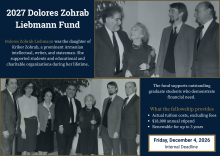
| Dolores Zohrab Liebmann Fellowship | Funds advanced education and graduate study; open to all disciplines. Students may not apply directly but must be nominated by Georgia Tech via internal submission. | December/January |
| Laura Bassi Scholarship | Provides editorial assistance to postgraduates and junior academics whose research focuses on neglected topics of study, broadly construed; scholarships open to every discipline. | Rolling; 3 per year, Winter, Spring, Summer |
| Schmidt Science Fellows |
| May |
Computing
| Fellowship Name | Description/Eligibility | Deadline |
|---|---|---|
| Apple AI/ML Scholars |
| September |
| Google Ph.D. Fellowship |
| April |
| IBM Fellowship Awards Program |
| October |
| JP Morgan Ph.D. Fellowship |
| March |
| Meta Research Ph.D. Fellowship |
| September |
Education & Humanities
| Fellowship Name | Description/Eligibility | Deadline |
|---|---|---|
| Knowles Science Teaching Fellowships for STEM High School Teachers |
| |
| National Academy of Education/Spencer Dissertation Fellowship Program |
| October |
| National Endowment for the Humanities |
| April |
| Southern Regional Education Board (SREB) Doctoral & Dissertation Awards |
|
Georgia Tech Institute-Funded Fellowships
| Fellowship Name | Description/Eligibility |
|---|---|
| President’s Fellowship |
|
| Georgia Tech Institute Fellowship |
|
| Stamps Fellows Program |
|
Government & Policy
| Fellowship Name | Description/Eligibility |
|---|---|
| AAAS Science and Technology Policy Fellowships |
|
| Christine Mirzayan Science and Technology Policy Graduate Fellowship |
|
| Georgia Tech Federal Jackets Fellowship |
|
| Presidential Management Fellowship |
|
Human/Environmental Health
| Fellowship Name | Description/Eligibility | Deadline |
|---|---|---|
| Agency for Healthcare Research and Quality |
| |
| Eli Lilly and Company Visiting Scientist Fellowship |
| September |
| Interdisciplinary and Health & Environment Leadership Development (IHE-LeaD) at Georgia Tech |
| May |
| National Institutes of Health (NIH) |
|
Language Study
| Fellowship Name | Description/Eligibility | Deadline |
|---|---|---|
| Boren Fellowships for Graduate Students |
| January |
| Critical Language Scholarship Program |
| |
| Fulbright Program, Critical Language Enhancement Award |
|
Science, Technology, Engineering, and Mathematics (STEM)
| Fellowship Name | Description/Eligibility | Deadline |
|---|---|---|
| ARCS Scholar Award |
| August |
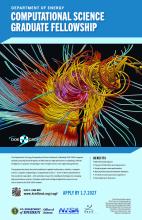
| Department of Energy Computational Science Graduate Fellowship |
| |
| Department of Energy Science Graduate Student Research Program | ||
| Graduate Fellowships for STEM Diversity |
| December |
| Hertz Foundation Graduate Fellowship |
| |
| HHMI Gilliam Fellowship for Advanced Study |
| September |
| National Defense Science and Engineering Grants | December | |
| National Science Foundation Graduate Research Fellowship Program (NSF GRFP) |
| October |
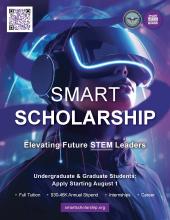
| Science, Mathematics, and Research for Transformation (SMART) Fellowships |
| December |
Study Abroad
| Fellowship Name | Description/Eligibility | Deadline |
|---|---|---|
| Churchill Scholarship |
| Nominations: November |
| Confucius China Studies Program |
| February 28 |
| Fulbright Awards |
| Campus deadline: varies |
| Gates Cambridge Scholarship |
| Varies |
| Marshall Sherfield Fellowships |
| Apply in early October the fall before completing a Ph.D. |
| Rhodes Scholarship |
| October |
Transportation
| Fellowship Name | Description/Eligibility |
|---|---|
| Dwight David Eisenhower Transportation Fellowship Program | Open to international students if their bachelor’s degree is from a U.S. institution. |
Upcoming Fellowship Opportunities



(text and background only visible when logged in)
(text and background only visible when logged in)
Subsidized Student Health Insurance (SHIP) for Fellows
If you’re on a fully funded fellowship, Georgia Tech subsidizes your Student Health Insurance Plan (SHIP) at the same rate as GRAs/GTAs. The Bursar posts the reduced (subsidized) charge to eligible student accounts each term.
What you’ll pay: Most of the premium is covered centrally—up to ~85%—so you’re billed only the lower, subsidized amount.
How eligibility works: Students on centrally administered fellowships (e.g., NSF GRFP, NDSEG, Stamps) are automatically eligible. If you are funded by an external or department-coordinated fellowship funds you and you do not see the reduced SHIP charge, contact your program—your fellowship may need to be added to the eligibility list.
Amounts are posted by term and may change in future years.
| Plan | Fall 2026 | Spring/Summer 2027 |
|---|---|---|
| Mandatory Student Plan (non-GRA/GTA/full fellowship) | $1378.82 | $1910.66 |
| Subsidized Plan (GRA/GTA/full fellowship) | $206.82 | $286.60 |
Questions? Email fellowships@grad.gatech.edu.
Tax Resources for Fellowships
Georgia Tech is unable to provide tax, financial or advice, and therefore all questions regarding taxes should be directed to a tax or financial advisor. The website "Personal Finance for PhDs" may be useful.
Do I include my scholarship, fellowship, or education grant as income on my tax return (for U.S. citizens and residents for tax purposes ONLY)?
This IRS Interactive Tax Assistant will help you determine whether the educational assistance you received is taxable. If you attended more than one educational institution and the funds were used for expenses other than qualified education expenses, run the interview separately for each educational institution.
Is my fellowship taxable if I am a nonresident for tax purposes?
In general, U.S. sourced taxable scholarships, fellowships, and grants that do not represent compensation for services are not subject to withholding when paid to U.S. citizens and residents, but they are subject to withholding when paid to nonresident aliens. If you are not sure if you are a resident or nonresident for tax purposes be sure to consult your GLACIER account. If you do not have a GLACIER account, please put in a ticket at asc.gatech.edu for assistance.
The withholding tax rate for nonresidents for tax purposes is 30%. However, the withholding tax rate may be reduced to 14% (or a lower treaty rate) if you are a nonresident alien student, researcher, or grantee who is temporarily present in the United States with an "F," "J," "M," or "Q" visa, and the taxable amounts you received are either:
- Incident to a qualified scholarship to which section 117(a) applies; or
- Granted by certain types of organizations described in section 1441(b)(2).
If, immediately before arriving in the United States, you were a tax resident of a country that has an income tax treaty with the United States, then you may be eligible for benefits under the applicable treaty, such as an exemption from tax, with respect to your scholarship, fellowship, or grant, including a specified amount that represents compensation for services. In order to determine whether you are eligible for a tax treaty, please consult your GLACIER account. If you do not have a GLACIER account, please put in a ticket at asc.gatech.edu for assistance.
Any part of your scholarship, fellowship, or grant that represents compensation for services performed in the United States is subject to graduated withholding.
Additional Resources
- Office of Scholarships and Financial Aid | Tax Information
- IRS | Tax Benefits for Education
- IRS | Tax Information for Individuals
- IRS | Tax Witholding Estimator
- How Fellows Should Prepare for Tax Time at the Start of the Academic Year | Inside Higher Ed
- Foreign Students, Scholars, Teachers, Researchers, and Exchange Visitors